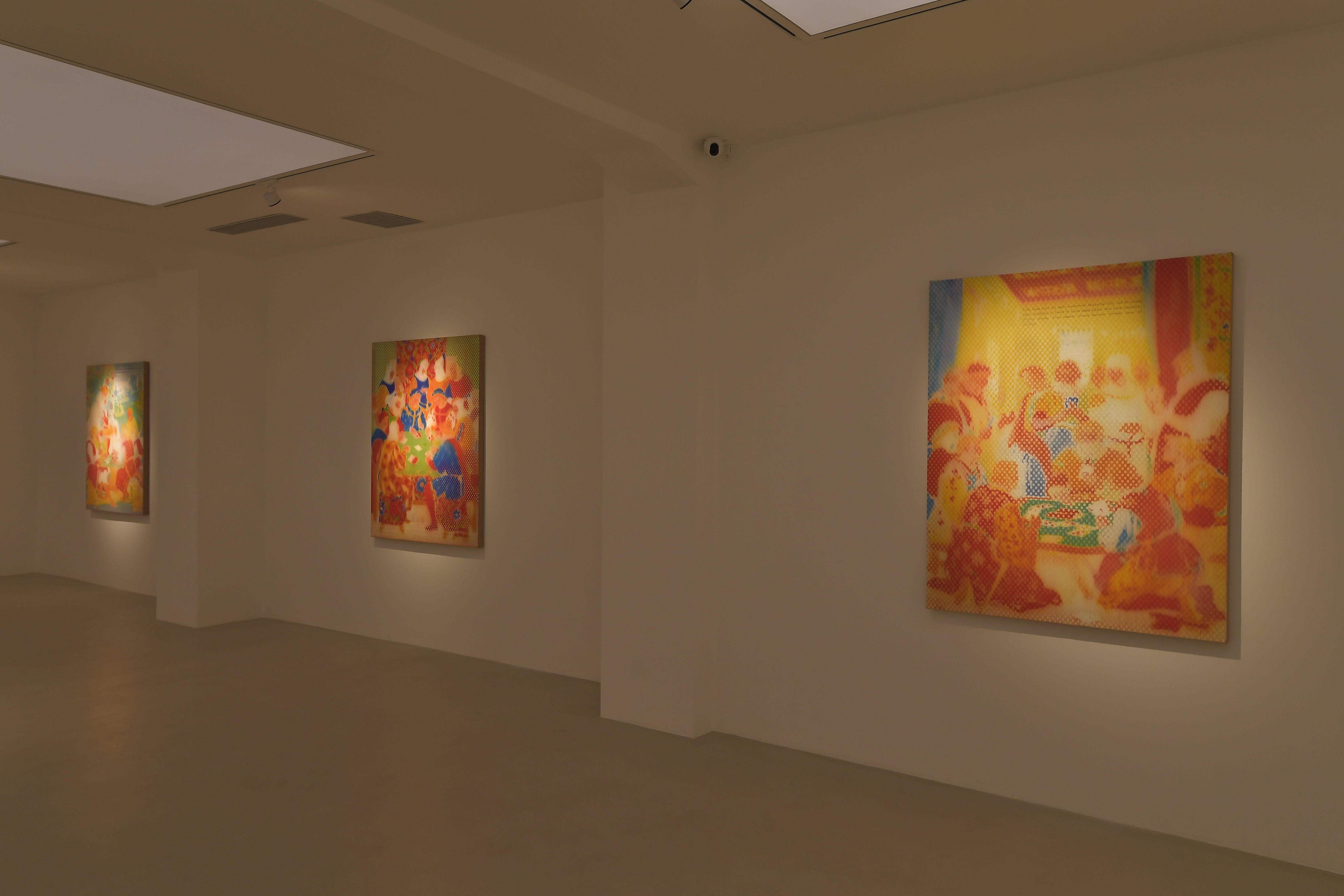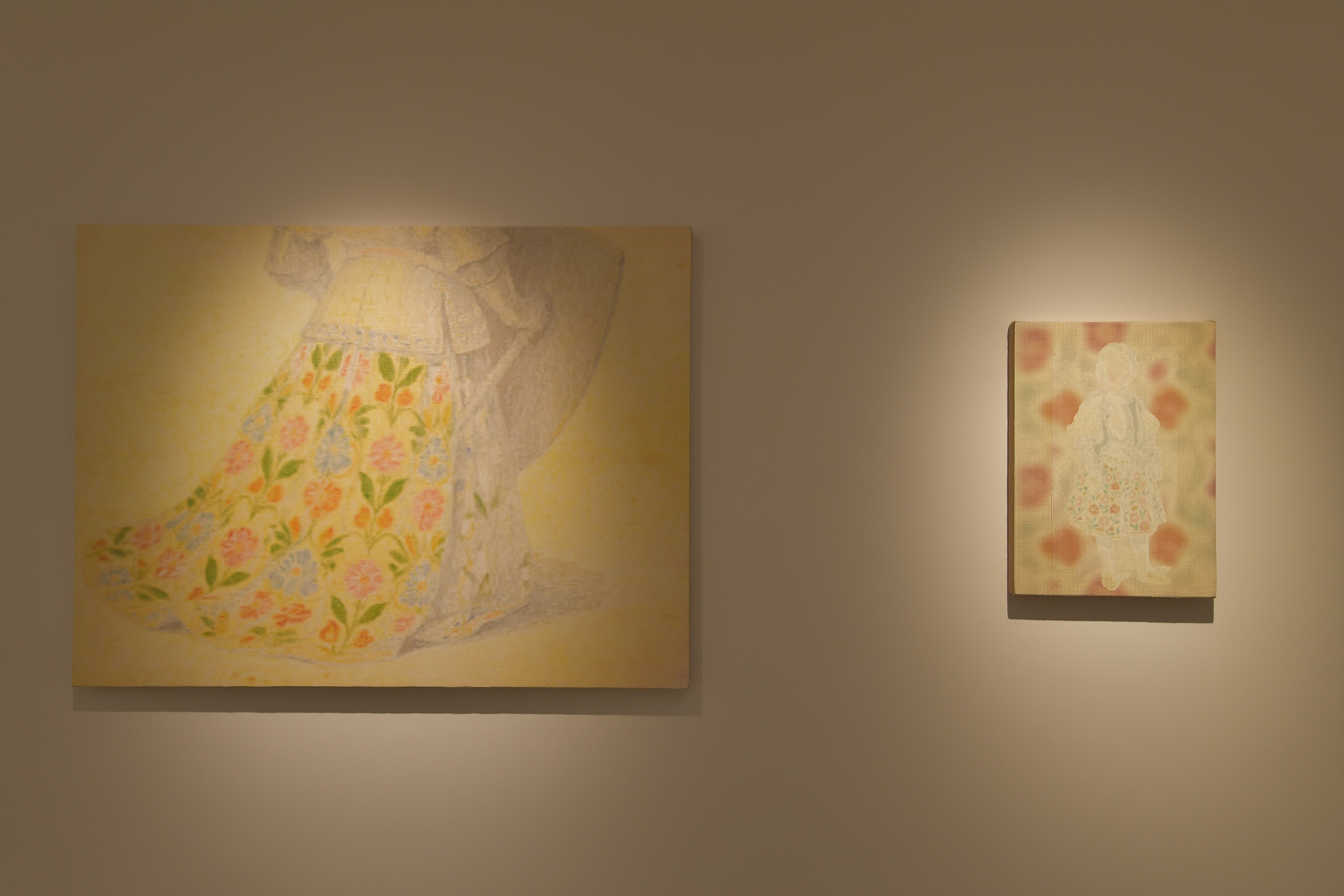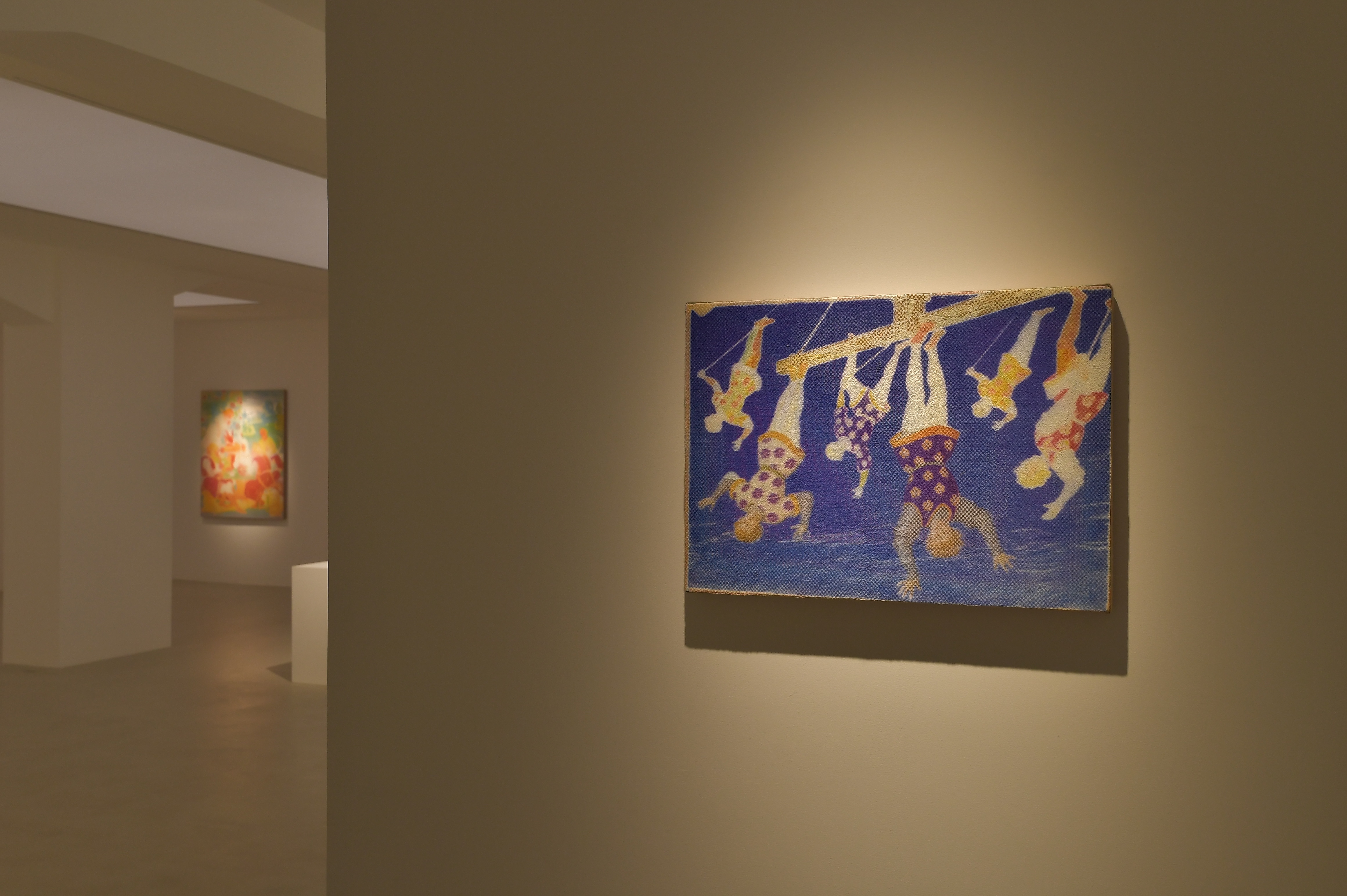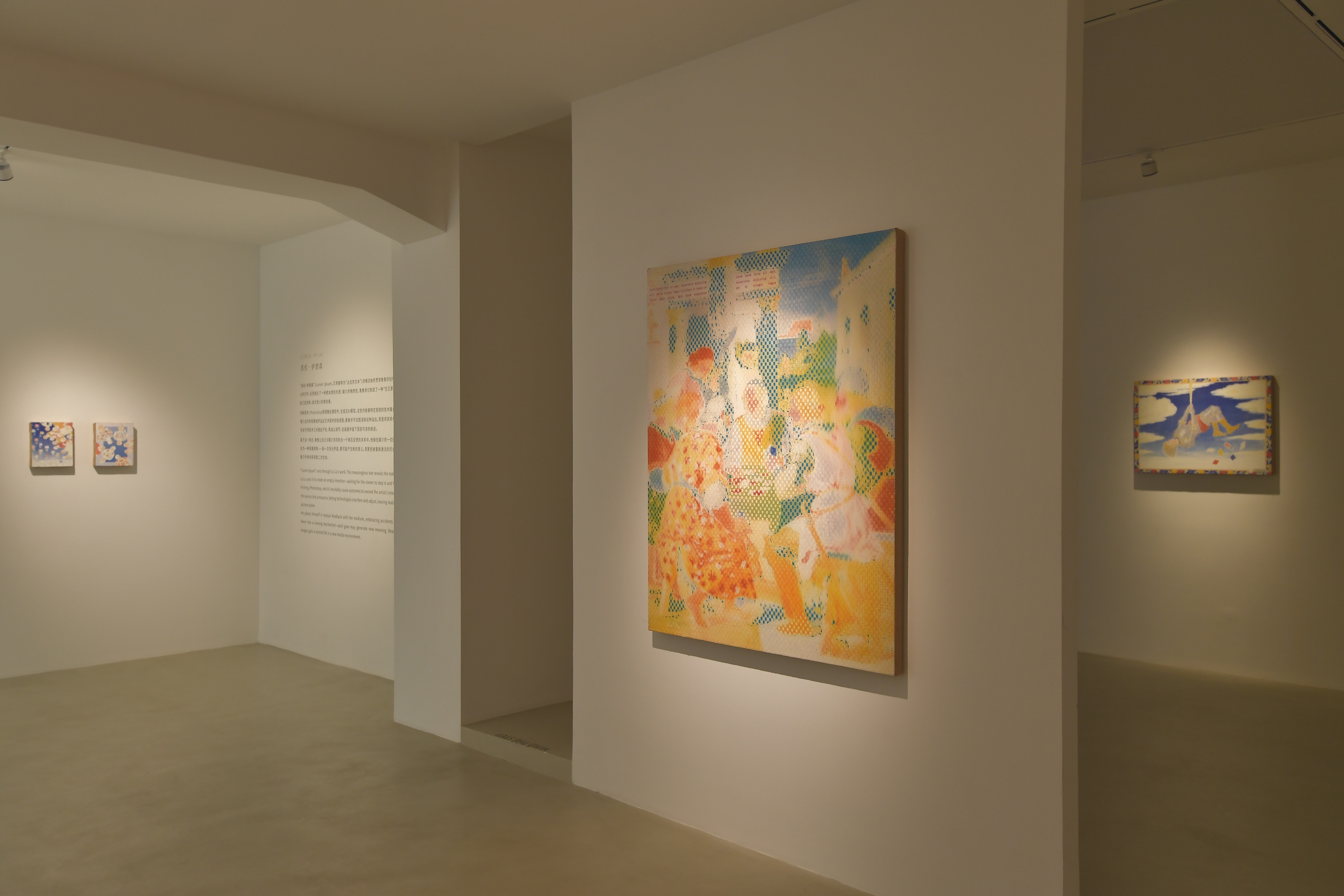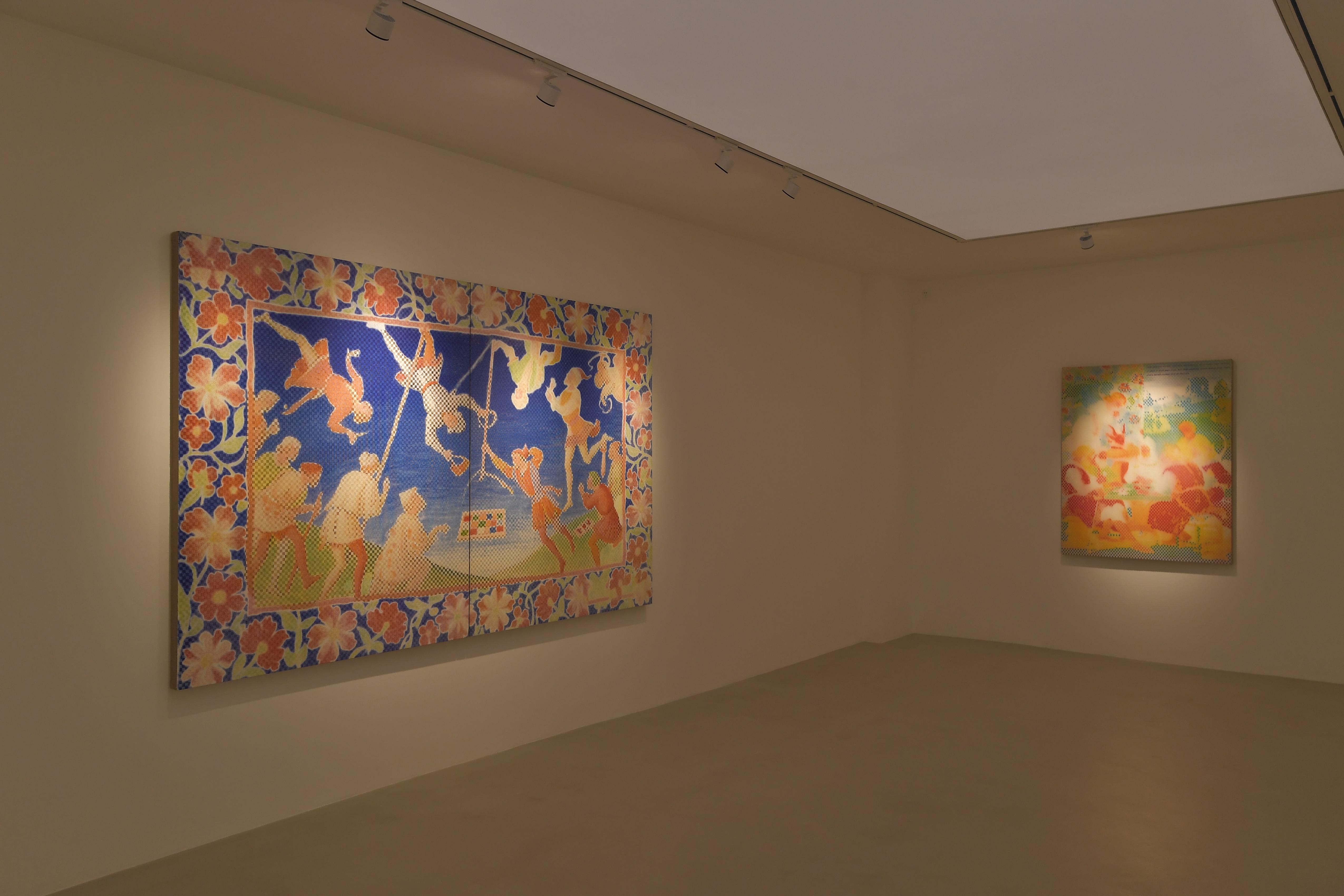

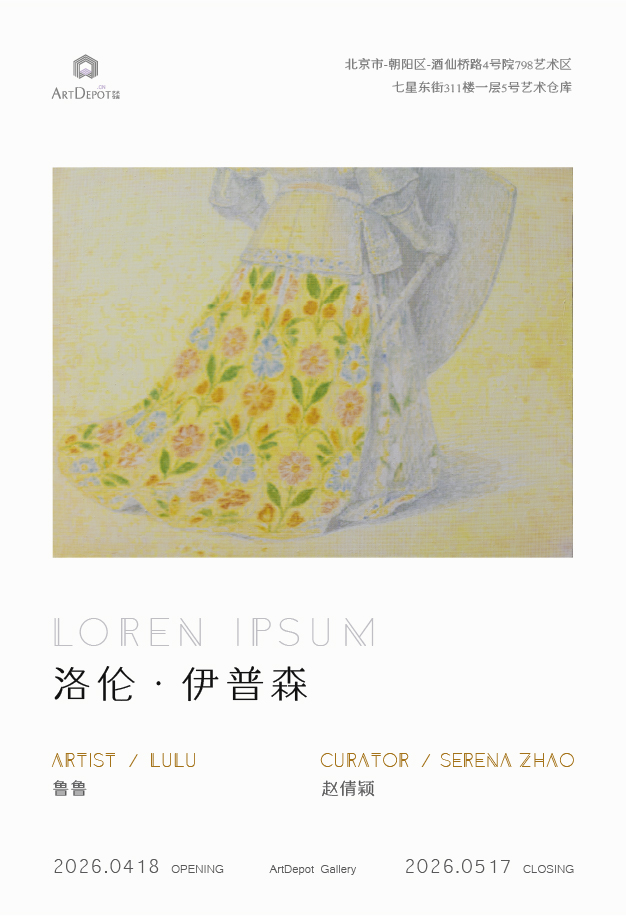
For Lu Lu, who grew up in Panjin, things do not possess an inherent hierarchy—the city gave him an egalitarian gaze. Northeastern floral cloth, Western religious motifs, medieval knights… these visual elements from different cultures and eras coexist peacefully in his eyes. Graduate training in art history gave him a natural sensitivity to canonical images, yet his visual sources have never been confined to tradition. This attitude extends further into an open media stance. In Lu Lu's view, no medium is more "authentic" than another — all are linguistic resources to be used, played with, and recomposed.
In his first solo exhibition Color Halftone (2025), Lu Lu reflected on the power of media in the streaming age and the artist's capacity for control within technological systems. The works in this exhibition, however, introduce AI-generated images in a more playful manner, reopening the possibilities of image interpretation.
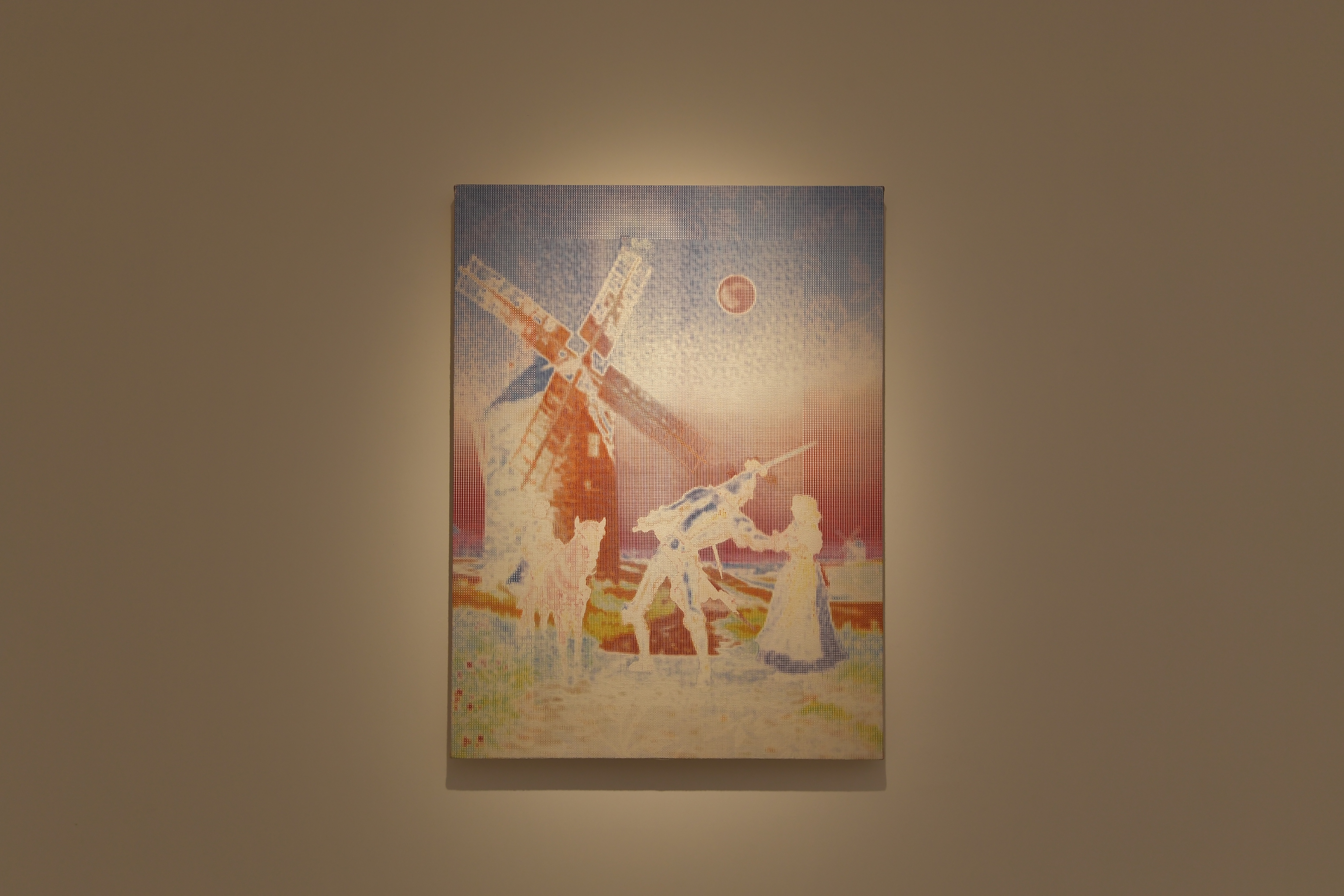
Lu Lu feeds the visual elements he appropriates—without hierarchy—back into AI for regeneration, stripping them from their original contexts. Processed through technological media, they produce a poetic landscape unique to the new media era. This is an embodied, relational empiricism, where meaning is constructed entirely through individual experience rather than pre-packaged within the image.
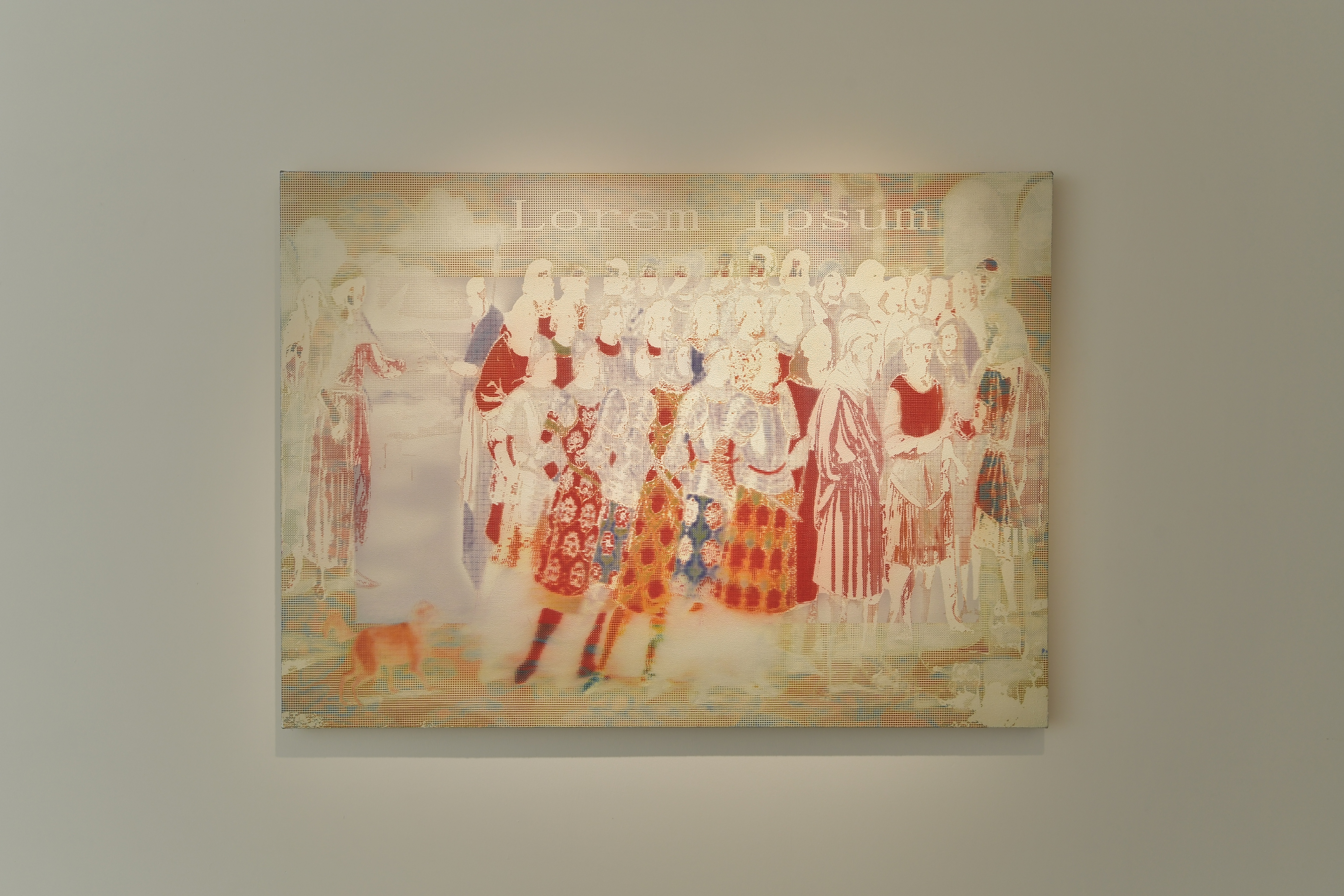
Meanwhile, the picture plane is reorganized into ordered halftone dots, reconstructing colors and forms through the underlying logic of print technology. At times, he deletes one channel in the CMYK mode—an operation resembling a Chinese character missing a radical. Incomplete and seemingly meaningless, it nevertheless generates new content with each viewing.
Printing, Photoshop, and artificial intelligence—these apparatuses with their own built-in rules—inevitably cause the outcome of any media operation to exceed the artist's original intention. This is precisely what Krämer calls the "heteronomy of media." But Lu Lu does not try to eliminate this excess; instead, he turns it into a usable resource. The interferences and adjustments between different technical media can be repeatedly layered into nonlinear couplings. In other words, Lu Lu's creative process is built upon an acknowledgment of the non-human dimensions within cybernetic systems.
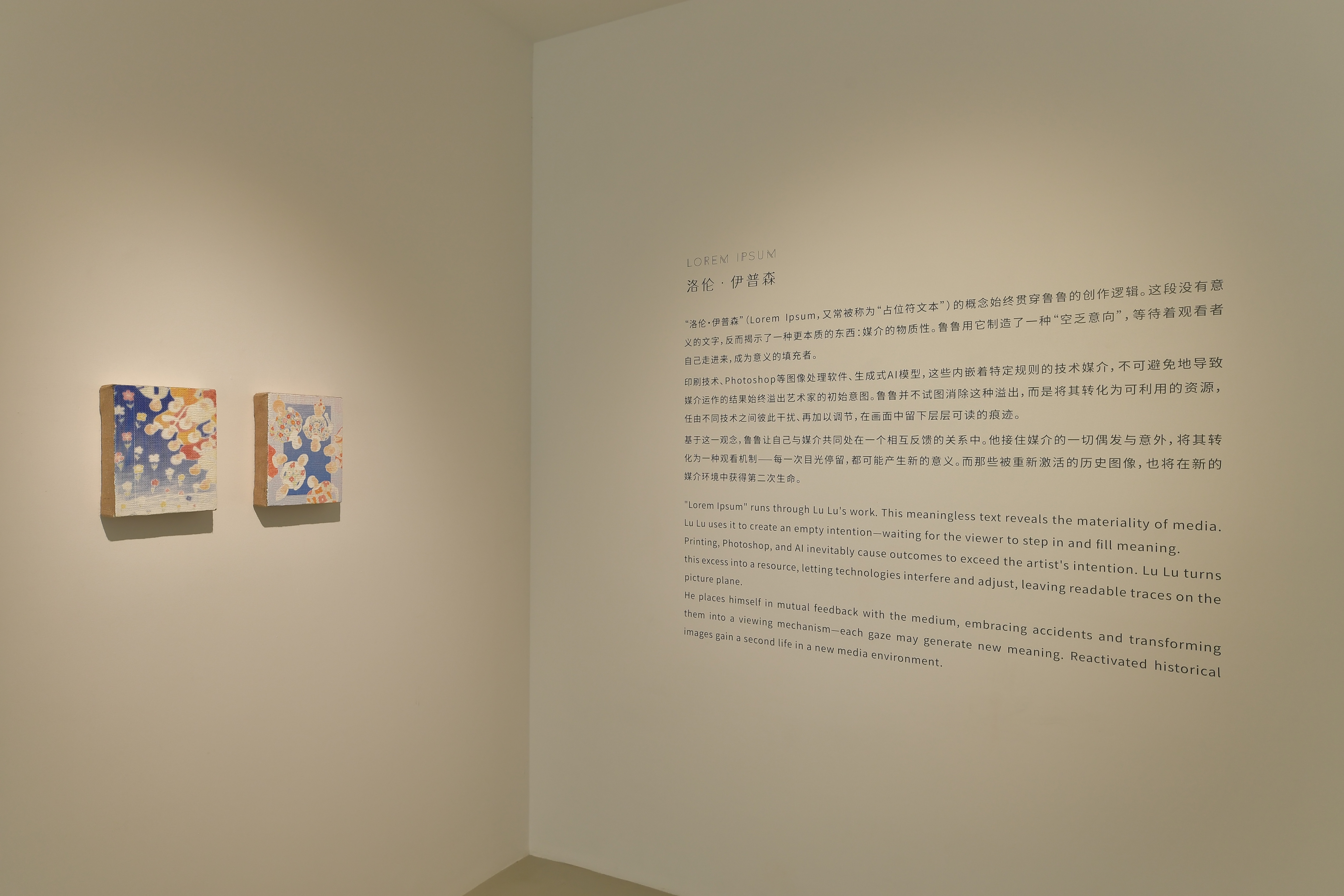
Notably, the concept of "Lorem Ipsum" runs throughout Lu Lu's creative logic. This is a deliberately corrupted, semantically emptied Latin passage, originating from Cicero's De finibus bonorum et malorum but stripped of its original meaning through a long typesetting tradition, leaving only letterforms, spacing, and typographic rhythm—a pure placeholder. A string of meaningless text. This paradoxically reveals something more fundamental: the materiality of media. Lu Lu uses it to deliberately create an "empty intention," vacating the position of meaning, waiting for the viewer to step in and become the filler of meaning.
In his notes, Lu Lu writes: "What I need is a visual resembling text. The default typographic symbols suit me perfectly… I've been using it for years but have never tried to translate it." He does not ask what the text originally meant, because he cares not about what language says, but about what language does.
Based on this notion, Lu Lu situates himself and his works within the circuit of "human–technology–world." He readily embraces all contingencies and accidents from media, transforming them into a viewing mechanism activated by each momentary gaze. And as the process of reflection unfolds, the reactivated historical images gain a second life in the new media environment.